
Three dietetic foods in 85 g cans, each for a different clinical purpose. They are not maintenance foods: a vet prescribes and supervises them, and also decides how long the course should last.
A soft pâté texture, for cats whose illness has reduced their appetite.
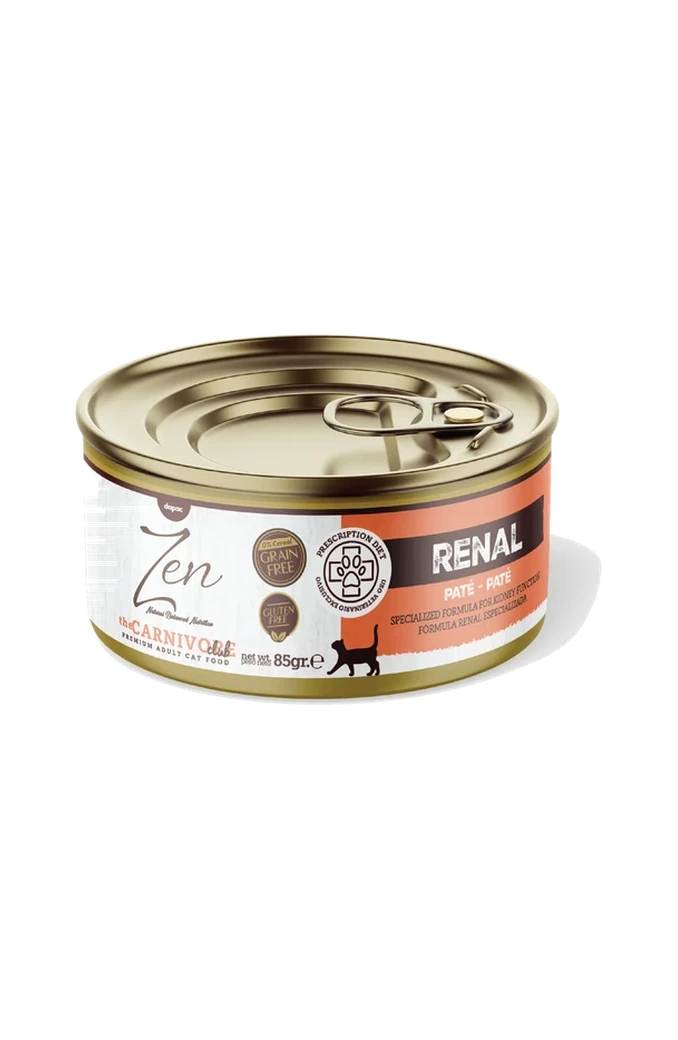
Prescription · Adult cat
Renal
Cats with chronic or temporary kidney failure.
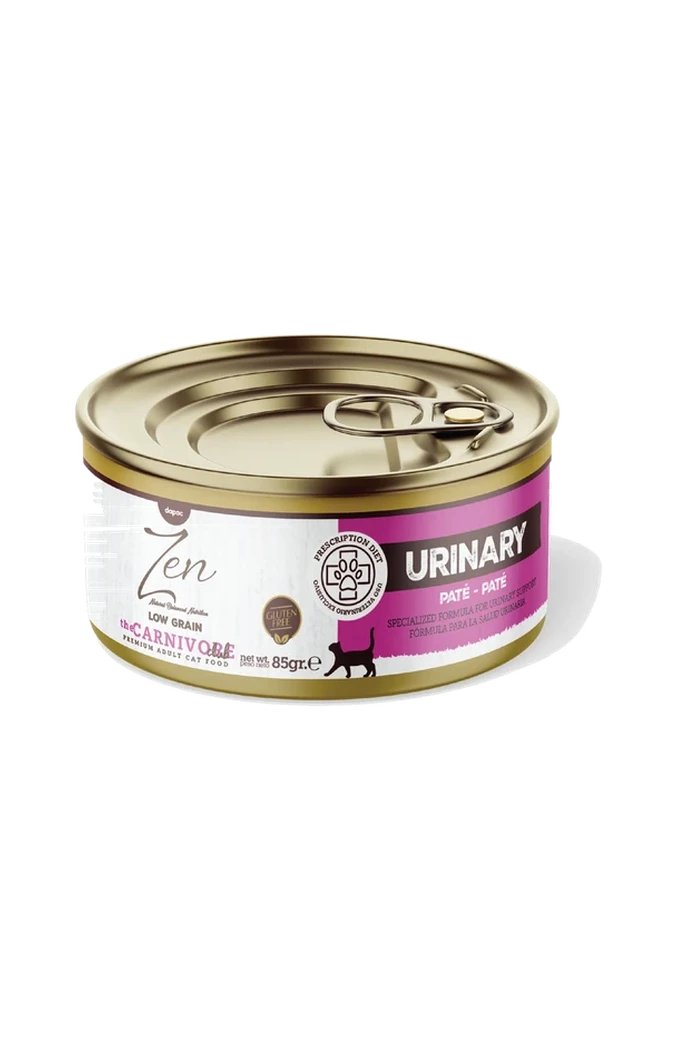
Prescription · Adult cat
Urinary
Dissolving struvite stones and managing the lower urinary tract.
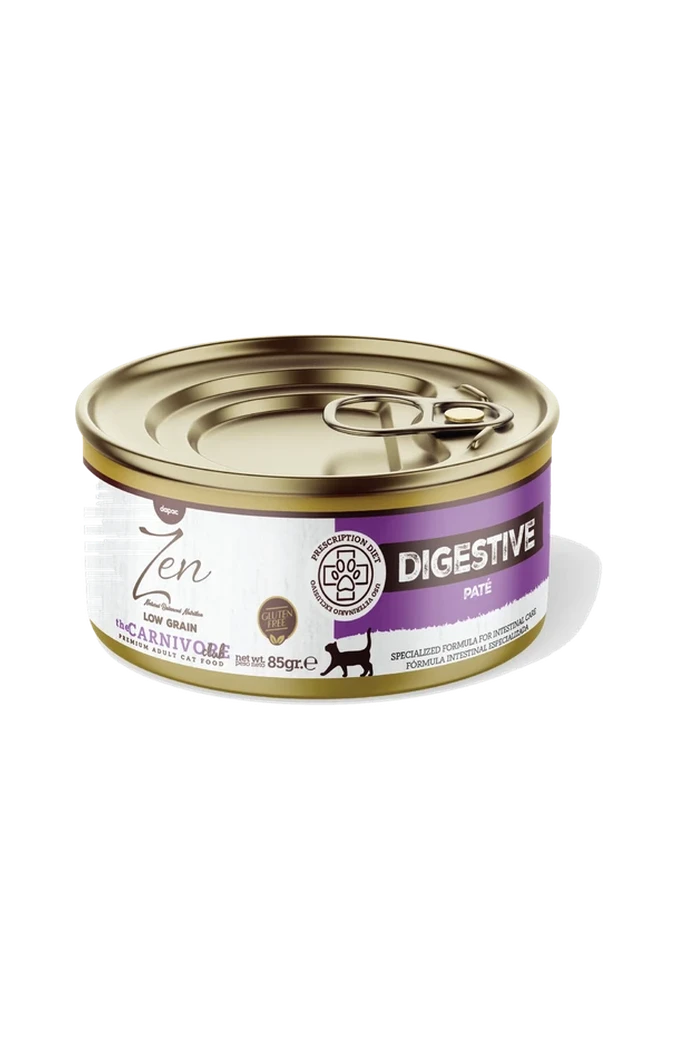
Prescription · Adult cat
Digestive
Cats with gastrointestinal disorders.
The distinction matters: it is not just another premium food.
A maintenance food covers the needs of a healthy cat. A dietetic food is formulated to to correct a specific problem, which is why its protein, fat and mineral levels do not follow the usual proportions.
In the Renal recipe, for instance, protein drops to 6.5% on purpose, so as not to overload the kidney.
That decision is not made by reading a page. Renal is for kidney failure, Urinary for struvite stones and Digestive for gastrointestinal disorders, but symptoms overlap and the wrong choice can make things worse.
Urinary is also contraindicated if the urolith is not struvite: a prior diagnosis is needed.
They are not medicines, so legally they need no prescription, but they do need veterinary advice. Using them without a diagnosis can delay finding the real problem.
It depends on the condition. Urinary is a temporary course of 5 to 12 weeks. Renal and Digestive can continue in chronic cases, always with veterinary review.